The Book of Yourself Newsletter
Issue 51: February 2026
|
|
Since his early years, the understanding that K was the great teacher naturally established a direct connection between him and education. In fact, after writing At the Feet of the Master (1910), he proceeded to produce a second book based on it entitled Education as Service (1912).[1] Education and his teachings were always of one piece, as his teachings were intended to bring about a transformative revolution in human consciousness and education was the most direct vehicle to do so. Naturally, neither the education nor the teaching fitted into the established social patterns. On the contrary, they started with a deep and thorough examination of the false foundations of both world and consciousness. For many students of K’s work, Education and the Significance of Life (1953) was his seminal work – some would say his manifesto – on education. Coming out in the wake of WW II and at the dawn of the Cold War, i.e. after two devastating world wars and the buildup to a potentially more destructive third, it took as its point of departure the utter failure of modern education to bring wisdom and peace to mankind. Its message was a compassionate and urgent cry for a radical overhaul of our educational approach and, consequently, of the conflictive psychological structures and destructive values at the heart of an enduring and ever more dangerous crisis.
|
“To discover what part education can play in the present world crisis, we should understand how that crisis has come into being. It is obviously the result of wrong values in our relationship to people, to property and to ideas. If our relationship with others is based on self-aggrandizement, and our relationship to property is acquisitive, the structure of society is bound to be competitive and self-isolating. If in our relationship with ideas we justify one ideology in opposition to another, mutual distrust and ill-will are the inevitable results.”
|
Education and the Significance of Life, pg. 69
|
This is the first paragraph of Chapter IV: Education and World Peace. K attributes the cause of the world crisis they were experiencing just then, but which is perfectly valid nowadays, to wrong values in our relationship with people, things and ideas, which is in our relationship with everything. As we may recall, for K life is relationship and relationship is with things, people and ideas. Sometimes he would also add our relationship with nature, which has always been essential, but which presently is catastrophic. So the application of wrong values to such relationships means the wrong approach to life as a whole. He spells what is involved in these wrong values in relation to the three objects of relationship he is considering here. When our relationship with others is based on self-aggrandizement and our relationship to property on acquisitiveness, then the structure of society is necessarily competitive and self-isolating. The competitive element is easily understood, as everyone is trying to be more and have more than others. In fact this whole structure functions on the false psychological assumption that to have is to be, so in order to be greater, we have to own more. The pernicious nature of this formula is undeniable, and yet it is one of the fundamental driving forces of the current socioeconomic structure in the world, with the expected but seemingly accepted deleterious consequences. The element of self-isolation does not only apply to the individual, who in order to rise above the others and maintain his superior position must separate himself from them, but to the collective entity as it competes with other similar entities for supremacy and resources. These separate entities are all informed by their adherence to some ideal concept that is in opposition to other ideologies and beliefs, leading to distrust, hatred and mutual destruction. All of which is being demonstrated daily in the political, social and so-called cultural scene the world over. So this is an abiding pattern of disorder in our approach to relationship as guided by these wrong values of self-aggrandisement, acquisitiveness and ideological identification.
|
“When one travels around the world, one notices to what an extraordinary degree human nature is the same, whether in India or America, in Europe or Australia. This is especially true in colleges and universities. We are turning out, as if through a mould, a type of human being whose chief interest is to find security, to become somebody important, or to have a good time with as little thought as possible. Conventional education makes independent thinking extremely difficult. Conformity leads to mediocrity. To be different from the group or to resit environment is not easy and is often risky as long as we worship success. The urge to be successful, which is the pursuit of reward whether in the material or in the so-called spiritual sphere, the search for inward or outward security, the desire for comfort – this whole process smothers discontent, puts an end to spontaneity and breeds fear; and fear blocks the intelligent understanding of life. With increasing age, dullness of mind and heart sets in.”
|
|
Education and the Significance of Life, pp.9-10
|
|
|
Here K observes the results of what he calls conventional education. Through his own travels around the world, he has noticed that human nature is very much the same all over. He remarks that this homogeneity is especially true when it comes to the near-industrial products of higher education. Essentially it moulds the same type of human being whose chief objective is to find security, become somebody and to enjoy himself thoughtlessly. Such an education is a form of conditioning which encourages conformity and prevents independent thinking. As it cultivates the worship of success, it makes it risky to be different from the norm and to question the environment. This urge to be successful, which involves the search for inward and outward comfort and security, smothers discontent, stops spontaneity and breeds fear, which blocks intelligence and with age results in dullness of mind and heart. Clearly, if this diagnosis is correct, such a conventional education is a self-defeating endeavour, for while it seeks to create social cohesion through the moulding of the individual in the collective pattern of uniformity through the standard means of reward and punishment, what it actually achieves is a collective whose intent on security and success condemn it to abandon discontent and questioning, which dulls the mind and heart and prevents the flowering of love and intelligence. And without these, what’s the meaning of education and what kind of society and world can we possibly expect?
|
“We must distinguish between the personal and the individual. The personal is the accidental; and by the accidental I mean the circumstances of birth, the environment in which we happen to have been brought up, with its nationalism, superstitions, class distinctions and prejudices. The personal or accidental is but momentary, though that moment may last a lifetime; and as the present system of education is based on the personal, the accidental, the momentary, it leads to perversion of thought and the inculcation of self-defensive fears.”
|
Education and the Significance of Life, pp.12
|
This is an important distinction that K makes between the personal and the individual. He expressed it differently in other contexts, for example as the contrast between the citizen and the human being. The personal, as he defines it, consists in the accidental environmental circumstances of birth and upbringing as a member of a particular society, with its nationalism, class distinctions, superstitions and prejudices. K sees these accidental circumstantial conditions as momentary, so not of any transcendental or fundamental nature, no matter how long they might be made to last. As far as he is concerned, and the evidence supporting his views is considerable, these qualities of temporality, circumstance and accident are what the conventional system of education is cultivating and aiming to preserve. The consideration of these factors as central to the standard educational endeavour raises the question as to whether education has a deeper meaning, which K associates with the significance of life itself, a life that is defined by the universal quality of our relationship to things, people and ideas and which, as such, goes beyond the temporal, circumstantial and accidental. Because, while we could argue that all relationship is immediate, therefore circumstantial, accidental and time-specific, the acceptance of these factors as defining elements of our being condemn us to separation from others and therefore to everlasting conflict. So that is not an education that is concerned with the significance of life or with world peace – unless we accept violence as inherent to existence. For K such an acceptance entails the inculcation of self-protective fears and the perversion of thought that goes with its innate divisiveness, aggressiveness and conflict.
|
|
“The individual is made up of different entities, but to emphasize the differences and to encourage the development of a definite type leads to many complexities and contradictions. Education should bring about the integration of these separate entities – for without integration, life becomes a series of conflicts and sorrows. Of what value is it to be trained as lawyers if we perpetuate litigation? Of what value is knowledge if we continue in our confusion? What significance has technical and industrial capacity if we use it to destroy one another? What is the point of our existence if it leads to violence and utter misery? Though we may have money or are capable or earning it, though we have our pleasures and our organized religions, we are in endless conflict.”
|
Education and the Significance of Life, pp.12
|
The universal condition of fragmentation and conflict is naturally the core issue that we face as humanity and that any education concerned with world peace must address. But this fragmentation is not only outward in terms of one group isolating itself from another in search of security and power and therefore creating conflict and undermining its security and that of another, but it is also manifest in the multiplicity of inner entities present in the individual. This is why K would often say that the outward division and conflict is the replica of our internal state of fragmentation. Conventional education tries to overcome this multiplicity by cultivating a specific type made in the image of the values and ideals of the given society. But this very elevation of one type over the others leads to contradiction, conflict and sorrow. So in the same way that education is intended to bring about a peaceful world, it must bring about the integration of the individual, for the two are the mirror image of each other. K points to the contradiction involved in those professions and activities that perpetuate the very issues they are meant to resolve, such as lawyers fostering litigation and science and industry being used for mutual destruction. Such total contradictions naturally raise the question as to the meaning of an existence that leads to violence and utter misery. The implication is that no matter how much wealth, pleasure or ideological and religious convictions we might have, a life of conflict is a meaningless life. So an education worthy of its name cannot teach for these self-contradictory purposes, but must teach for integration, for only in integration is life meaningful.
|
|
Be well, amigos, and let’s consider these matters, for K’s teachings are an education for us all,
|
|
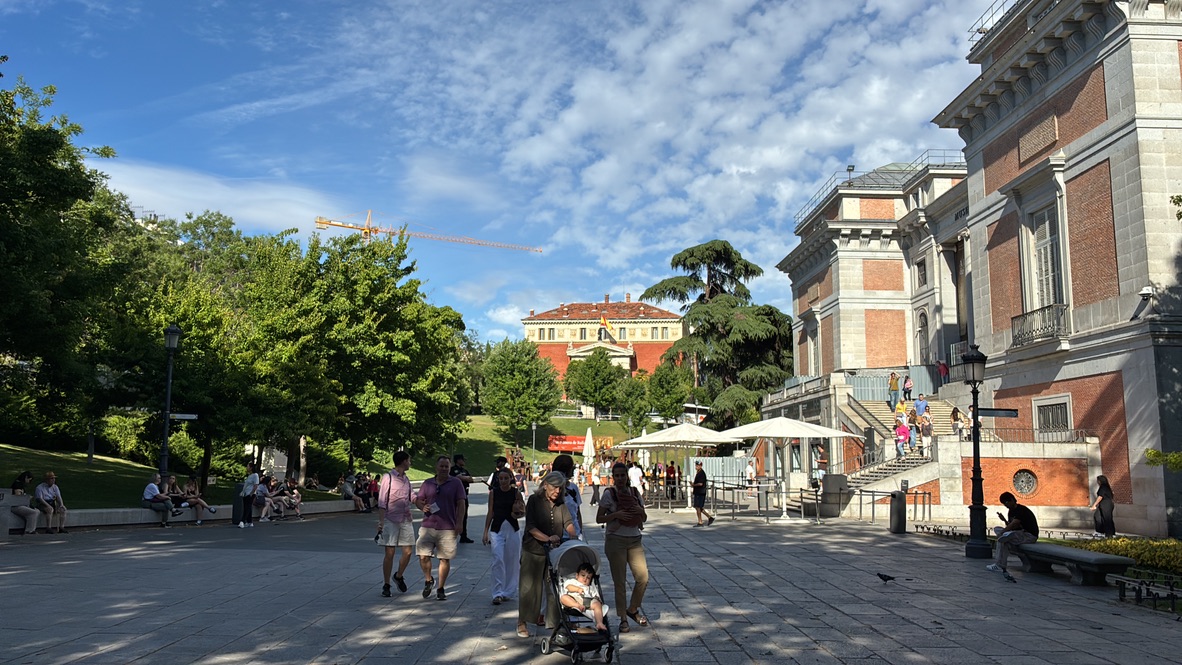
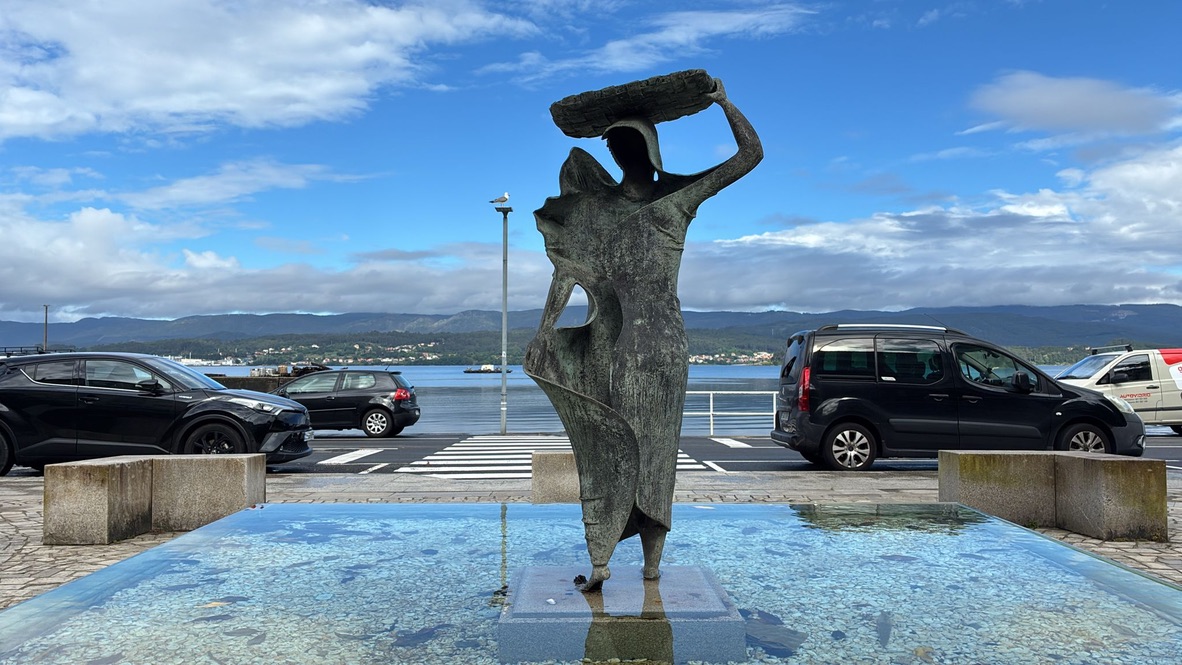
Photos by J. Gómez Rodríguez: 1. Outside the Prado Museum, Madrid, Spain. 2. 'The Fishmonger', Rianxo, A Coruña, Spain.
|
|
|
|
|
|
The Book of Yourself Newsletter
Issue 51: February 2026
|
|
|
Since his early years, the understanding that K was the great teacher naturally established a direct connection between him and education. In fact, after writing At the Feet of the Master (1910), he proceeded to produce a second book based on it entitled Education as Service (1912).[1] Education and his teachings were always of one piece, as his teachings were intended to bring about a transformative revolution in human consciousness and education was the most direct vehicle to do so. Naturally, neither the education nor the teaching fitted into the established social patterns. On the contrary, they started with a deep and thorough examination of the false foundations of both world and consciousness. For many students of K’s work, Education and the Significance of Life (1953) was his seminal work – some would say his manifesto – on education. Coming out in the wake of WW II and at the dawn of the Cold War, i.e. after two devastating world wars and the buildup to a potentially more destructive third, it took as its point of departure the utter failure of modern education to bring wisdom and peace to mankind. Its message was a compassionate and urgent cry for a radical overhaul of our educational approach and, consequently, of the conflictive psychological structures and destructive values at the heart of an enduring and ever more dangerous crisis.
|
“To discover what part education can play in the present world crisis, we should understand how that crisis has come into being. It is obviously the result of wrong values in our relationship to people, to property and to ideas. If our relationship with others is based on self-aggrandizement, and our relationship to property is acquisitive, the structure of society is bound to be competitive and self-isolating. If in our relationship with ideas we justify one ideology in opposition to another, mutual distrust and ill-will are the inevitable results.”
|
Education and the Significance of Life, pg. 69
|
This is the first paragraph of Chapter IV: Education and World Peace. K attributes the cause of the world crisis they were experiencing just then, but which is perfectly valid nowadays, to wrong values in our relationship with people, things and ideas, which is in our relationship with everything. As we may recall, for K life is relationship and relationship is with things, people and ideas. Sometimes he would also add our relationship with nature, which has always been essential, but which presently is catastrophic. So the application of wrong values to such relationships means the wrong approach to life as a whole. He spells what is involved in these wrong values in relation to the three objects of relationship he is considering here. When our relationship with others is based on self-aggrandizement and our relationship to property on acquisitiveness, then the structure of society is necessarily competitive and self-isolating. The competitive element is easily understood, as everyone is trying to be more and have more than others. In fact this whole structure functions on the false psychological assumption that to have is to be, so in order to be greater, we have to own more. The pernicious nature of this formula is undeniable, and yet it is one of the fundamental driving forces of the current socioeconomic structure in the world, with the expected but seemingly accepted deleterious consequences. The element of self-isolation does not only apply to the individual, who in order to rise above the others and maintain his superior position must separate himself from them, but to the collective entity as it competes with other similar entities for supremacy and resources. These separate entities are all informed by their adherence to some ideal concept that is in opposition to other ideologies and beliefs, leading to distrust, hatred and mutual destruction. All of which is being demonstrated daily in the political, social and so-called cultural scene the world over. So this is an abiding pattern of disorder in our approach to relationship as guided by these wrong values of self-aggrandisement, acquisitiveness and ideological identification.
|
“When one travels around the world, one notices to what an extraordinary degree human nature is the same, whether in India or America, in Europe or Australia. This is especially true in colleges and universities. We are turning out, as if through a mould, a type of human being whose chief interest is to find security, to become somebody important, or to have a good time with as little thought as possible. Conventional education makes independent thinking extremely difficult. Conformity leads to mediocrity. To be different from the group or to resit environment is not easy and is often risky as long as we worship success. The urge to be successful, which is the pursuit of reward whether in the material or in the so-called spiritual sphere, the search for inward or outward security, the desire for comfort – this whole process smothers discontent, puts an end to spontaneity and breeds fear; and fear blocks the intelligent understanding of life. With increasing age, dullness of mind and heart sets in.”
|
|
Education and the Significance of Life, pp.9-10
|
|
|
|
Here K observes the results of what he calls conventional education. Through his own travels around the world, he has noticed that human nature is very much the same all over. He remarks that this homogeneity is especially true when it comes to the near-industrial products of higher education. Essentially it moulds the same type of human being whose chief objective is to find security, become somebody and to enjoy himself thoughtlessly. Such an education is a form of conditioning which encourages conformity and prevents independent thinking. As it cultivates the worship of success, it makes it risky to be different from the norm and to question the environment. This urge to be successful, which involves the search for inward and outward comfort and security, smothers discontent, stops spontaneity and breeds fear, which blocks intelligence and with age results in dullness of mind and heart. Clearly, if this diagnosis is correct, such a conventional education is a self-defeating endeavour, for while it seeks to create social cohesion through the moulding of the individual in the collective pattern of uniformity through the standard means of reward and punishment, what it actually achieves is a collective whose intent on security and success condemn it to abandon discontent and questioning, which dulls the mind and heart and prevents the flowering of love and intelligence. And without these, what’s the meaning of education and what kind of society and world can we possibly expect?
|
“We must distinguish between the personal and the individual. The personal is the accidental; and by the accidental I mean the circumstances of birth, the environment in which we happen to have been brought up, with its nationalism, superstitions, class distinctions and prejudices. The personal or accidental is but momentary, though that moment may last a lifetime; and as the present system of education is based on the personal, the accidental, the momentary, it leads to perversion of thought and the inculcation of self-defensive fears.”
|
Education and the Significance of Life, pp.12
|
This is an important distinction that K makes between the personal and the individual. He expressed it differently in other contexts, for example as the contrast between the citizen and the human being. The personal, as he defines it, consists in the accidental environmental circumstances of birth and upbringing as a member of a particular society, with its nationalism, class distinctions, superstitions and prejudices. K sees these accidental circumstantial conditions as momentary, so not of any transcendental or fundamental nature, no matter how long they might be made to last. As far as he is concerned, and the evidence supporting his views is considerable, these qualities of temporality, circumstance and accident are what the conventional system of education is cultivating and aiming to preserve. The consideration of these factors as central to the standard educational endeavour raises the question as to whether education has a deeper meaning, which K associates with the significance of life itself, a life that is defined by the universal quality of our relationship to things, people and ideas and which, as such, goes beyond the temporal, circumstantial and accidental. Because, while we could argue that all relationship is immediate, therefore circumstantial, accidental and time-specific, the acceptance of these factors as defining elements of our being condemn us to separation from others and therefore to everlasting conflict. So that is not an education that is concerned with the significance of life or with world peace – unless we accept violence as inherent to existence. For K such an acceptance entails the inculcation of self-protective fears and the perversion of thought that goes with its innate divisiveness, aggressiveness and conflict.
|
|
“The individual is made up of different entities, but to emphasize the differences and to encourage the development of a definite type leads to many complexities and contradictions. Education should bring about the integration of these separate entities – for without integration, life becomes a series of conflicts and sorrows. Of what value is it to be trained as lawyers if we perpetuate litigation? Of what value is knowledge if we continue in our confusion? What significance has technical and industrial capacity if we use it to destroy one another? What is the point of our existence if it leads to violence and utter misery? Though we may have money or are capable or earning it, though we have our pleasures and our organized religions, we are in endless conflict.”
|
Education and the Significance of Life, pp.12
|
The universal condition of fragmentation and conflict is naturally the core issue that we face as humanity and that any education concerned with world peace must address. But this fragmentation is not only outward in terms of one group isolating itself from another in search of security and power and therefore creating conflict and undermining its security and that of another, but it is also manifest in the multiplicity of inner entities present in the individual. This is why K would often say that the outward division and conflict is the replica of our internal state of fragmentation. Conventional education tries to overcome this multiplicity by cultivating a specific type made in the image of the values and ideals of the given society. But this very elevation of one type over the others leads to contradiction, conflict and sorrow. So in the same way that education is intended to bring about a peaceful world, it must bring about the integration of the individual, for the two are the mirror image of each other. K points to the contradiction involved in those professions and activities that perpetuate the very issues they are meant to resolve, such as lawyers fostering litigation and science and industry being used for mutual destruction. Such total contradictions naturally raise the question as to the meaning of an existence that leads to violence and utter misery. The implication is that no matter how much wealth, pleasure or ideological and religious convictions we might have, a life of conflict is a meaningless life. So an education worthy of its name cannot teach for these self-contradictory purposes, but must teach for integration, for only in integration is life meaningful.
|
|
Be well, amigos, and let’s consider these matters, for K’s teachings are an education for us all,
|
|
Photos by J. Gómez Rodríguez: 1. Outside the Prado Museum, Madrid, Spain. 2. 'The Fishmonger', Rianxo, A Coruña, Spain.
|
|
|
|
|
|
|