The Book of Yourself Newsletter
Issue 53: April 2026
|
|
|
The current state of the world is too dangerous to gloss over. Besides, we can no longer bury our heads in the usual sands. We cannot wash our hands of what is happening because it affects us all. That old trick of letting others suffer what does not affect us directly is not tenable in an increasingly interdependent world. Besides, that presumed isolation of humanity in distinct pockets was always an illusion, for it ignored the fundamental fact that as human beings we are all deeply related and bound in the common stream of consciousness. That consciousness is essentially participatory in nature, no matter how seemingly distant people might be on the globe’s surface. Consciousness is the repository of the universal experience of mankind, and it runs like a river through every continent, through every race, through every culture. One of the great mistakes of history might be precisely the atomization of consciousness into such geological, biological and conceptual compartments. In identifying with the fragments we lost sight of the whole. We became tribal, separate, possessive and at war, for where there is division there must be conflict. That, K used to say, is a law.
|
|
One common view is that we are experiencing a psychological and cultural regression. One of its key aspects is the near-total loss of the moral compass. Not even the international legal framework is able to contain the greed and violence of ambitious tyrants and oligarchs. Their values are measured in economic, technological and military terms. Competition is the name of the game, and its purpose is to win by any means necessary. This whole drive for wealth and power has become so ruthless and brazen that its vainglorious champions no longer pretend to disguise their motives with ideological or cultural niceties. There is no ideology, only naked greed. There is no faith, only self-worship. There is no altruism, only personal gain. The result is a broken social fabric and a fractured international scene where the most blatant crimes against humanity go unpunished or even unnamed because might is right and everyone is afraid. While our belief in progress caused us to expect an ever-closer approximation to universal peace, justice and solidarity with every passing day, what the present situation represents is not a new dawn but a return to a dark age. We no longer have to wait for the barbarians, for the barbarians is what we have become.
|
|
One diagnosis as to how this could have happened is the loss of collective memory. They say that if we forget our history we are bound to repeat it. More than mere remembering, it might be a case of understanding and feeling the true meaning of the past. For memory itself can only repeat and it can be easily distorted to reinvent the old lies and reenact the old cruelties. That’s why the study of history is so important, for it is the story of mankind. But more consequential than a single academic subject is the whole failure of schooling to maintain the highest quality of awareness, compassion and intelligence so that those dreadful chapters will not come back. To rise to this total responsibility requires a vast awareness of the time-bound unfolding of the human condition, an awareness of the essential fact that each of us is the whole of humanity. But where is such an education? Where are the parents and teachers who can begin to move the world and the new generations from darkness to light?
|
|
“The right kind of education begins with the educator, who must understand himself and be free from established patterns of thought; for what he is, that he imparts. If he has not been rightly educated, what can he teach except the same mechanical knowledge on which he himself has been brought up? The problem, therefore, is not the child, but the parent and the teacher; the problem is to educate the educator.”
|
Education and the Significance of Life, pg. 100
|
None of us has been rightly educated. And whether we are teachers or parents, our re-education begins with understanding ourselves and being free from the standard patterns of thought, for that is what we are and what we will transmit. We will impart not only the same mechanical knowledge that we were taught, but the same frozen traditions of sociocultural conditioning. So we, the adults, are the problem, not the child, and therefore the first priority is to know ourselves. This is naturally made difficult by the very crystallized patterns of thought, action and experience that have already shaped us. We were taught what to think instead of how to think. Most of us, at any rate, are occupied with our own problems and ambitions rather than concerned about the present social and moral deterioration. We want our children to have a secure future in a world fractured along national, ethnic, socioeconomic, political and religious lines, which means fragmentation and, therefore, constant insecurity. We say we love our children, but the fact that our actions condemn them to live in fear, conflict and sorrow raises some serious questions about whether we love them at all.
|
|
|
|
“Do parents ever ask themselves why they have children? Do they have children to perpetuate their name, to carry on their property? Do they want children merely for the sake of their own delight, to satisfy their own emotional needs? If so, then the children become a mere projection of the desires and fears of their parents. Can parents claim to love their children when, by educating them wrongly, they foster envy, enmity and ambition? Is it love that stimulates the national and racial antagonisms which lead to war, destruction and utter misery, that sets man against man in the name of religions and ideologies? Many parents encourage the child in the ways of conflict and sorrow, not only by allowing him to be submitted to the wrong kind of education, but by the manner in which they conduct their own lives; and then, when the child grows up and suffers, they pray for him or find excuses for his behaviour. The suffering of parents for their children is a form of possessive self-pity which exists only when there is no love.”
|
Education and the Significance of Life, pg. 103
|
Animals don’t ask themselves why they reproduce. It is a natural outcome of their biological clock. Likewise, most of us probably have children primarily out of the same instinctual drive. Some, however, like the aristocrats of the past or the megalomaniacs of the present, might indeed have them in order to perpetuate their name, their lineage and their property. In any case, the desire to continue through them in some form may enter tacitly or deliberately into it. Then there is our general need for affection in relation to another being, and children are a real delight that may satisfy our emotional needs. But K observes that these very motives reduce our children to mere projections of our fears and desires. For it is not only a matter of the continuity of the species but of ourselves, of the ‘me’ and the ‘mine’. These purposes condition the existence of the child, who is born not as itself and for itself, in all the universality of its being, but under our projections upon them as the means to achieve our ambitions and satisfy our needs. And isn’t that a perennial source of struggle with our parents and with ourselves as we seek to gain their approval by conforming to their wishes for us, which are the fulfilment of theirs? Which means that having children is no mere reproductive function, for it has deep implications for the creative freedom and wholeness of mankind.
|
|
K doubts that we can claim that we love our children when we subject them to an educational system that sustains the standard conditions of conflict and sorrow. Most of us may feel that at the end of the day we have no choice. Society demands that we send them to school and we have very little say, it would seem, on what goes on there. To change the educational system we would need to change the institutional structure and values of society, and most of us don’t feel up to what looks like such a colossal task. But maybe we can do more than we think. To begin with, if we love our children, we don’t want them to be damaged, whereas the standard education our children receive encourages envy, ambition and enmity. It cultivates nationalism, racism and ideological and religious sectarianism, all of which divides human beings and leads to antagonism, misery and war. We may also be damaging them by our conduct and way of life. School and family are two crucial environments which, while intending care, are an enduring source of trauma. Such an unhealthy upbringing implies a total contradiction in our intentions, for while we want our children to be healthy, happy and safe, in the very pursuit of these ends we are sowing the seeds of their destruction and suffering. And when they suffer, we seem surprised and suffer with and for them. Which means that we are not aware of how as educators, whether parents or teachers, we have created the conditions for such suffering. The last sentence in this quote is rather devastating of any pretence of love under such circumstances. Our ‘love’ for them is a possessive projection and so the resulting sorrow is a form of self-pity. So loving our children involves, to begin with, a radical negation of all this.
|
“If parents love their children, they will not be nationalistic, they will not identify themselves with any country; for the worship of the State brings on war, which kills or maims their sons. If parents love their children, they will discover what is right relationship to property; for the possessive instinct has given property an enormous and false significance which is destroying the world. If parents love their children, they will not belong to any organized religion; for dogma and belief divide people into conflicting groups, creating antagonism between man and man. If parents love their children, they will do away with envy and strife and will set about altering fundamentally the structure of present-day society. As long as we want our children to be powerful, to have bigger and better positions, to become more and more successful, there is no love in our hearts; for the worship of success encourages conflict and misery. To love one's children is to be in complete communion with them; it is to see that they have the kind of education that will help them to be sensitive, intelligent and integrated.”
|
|
Education and the Significance of Life, pp. 103-104
|
|
So this is what is involved in loving our children and in an education intended to transform the world away from its destructive patterns of sectarian self-centredness. That means not identifying with any country or worshipping the State, as nationalism implies that our children and the children of others will be killing each other in war. It means abandoning the possessive instinct that gives property an exaggerated and false value, which is another factor of conflict and violence in the world. Belonging to an organized religion or subscribing to a political ideology are equally divisive factors of contention and suffering. It necessitates altering the present social structure away from its foundations in envy, greed and strife. And it means we have to stop being ambitious for our children, urging them to acquire ever higher positions and greater success and power, for all these breed the everlasting misery and conflict of competition, rivalry and animosity. All these things break down the communion of relationship with our children, with our partners and with our neighbours. Even with ourselves. These structures of conditioning break down our integrity, intelligence and sensitivity. And that is what we need to educate for. If we love our children. If we love at all.
|
|
Be well, amigos, and let’s take this wholesome approach to love and education to heart,
|
|
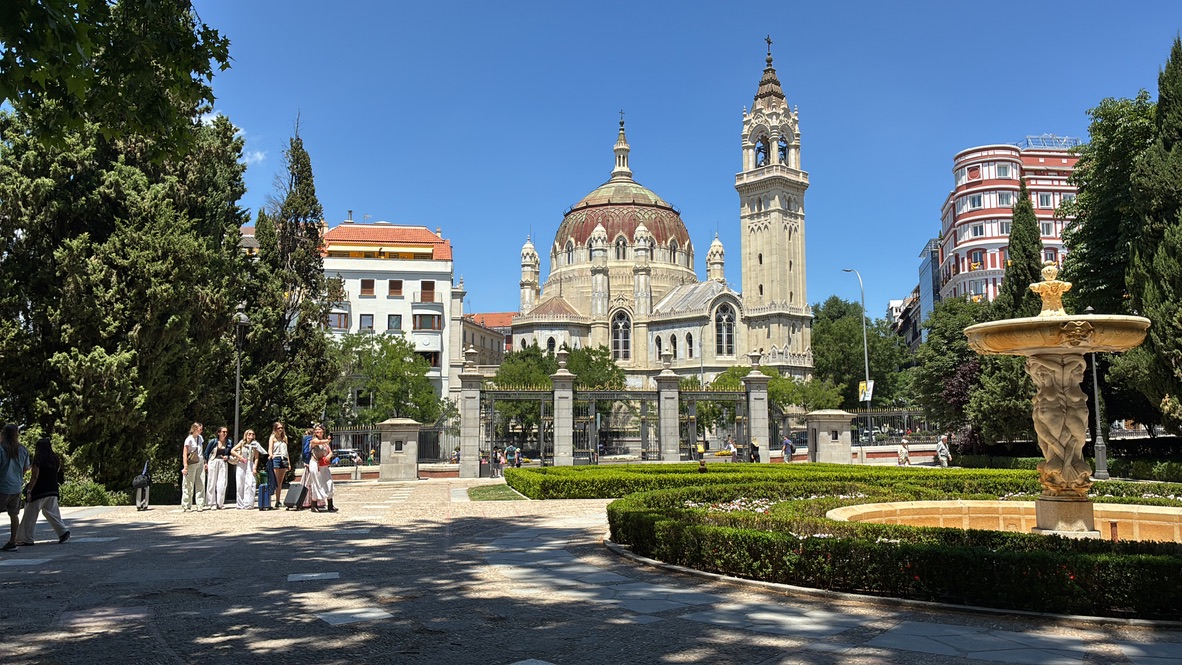
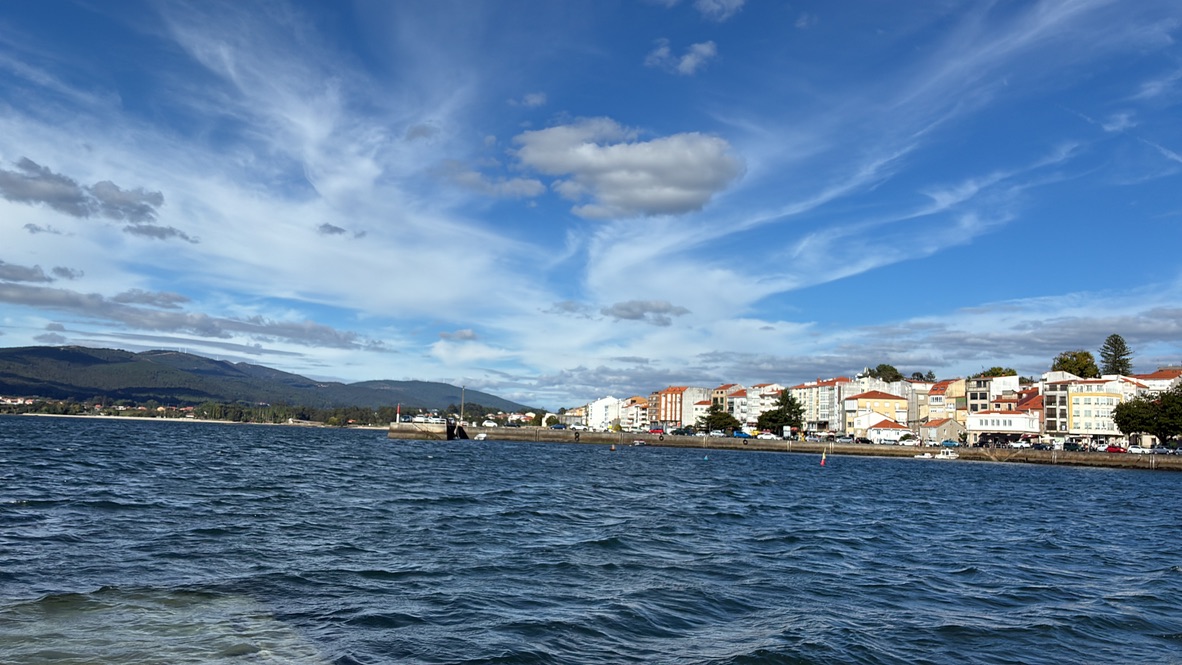
Photos by J. Gómez Rodríguez: 1. Parque del Retiro, Madrid, Spain. 2. View from the pier, Rianxo, A Coruña, Spain.
|
|
|
|
|
|
|
|
|
